Commercial Waste Walthamstow: Recycling and Sustainability
 Commercial Waste Walthamstow is committed to creating an eco-friendly waste disposal area across the borough, helping businesses reduce their footprint and move toward a more circular economy. Our approach brings together practical on-the-ground services, local partnerships and clear targets so commercial operators can convert waste into value. By coordinating collections, reuse and processing we turn the sustainable rubbish area aspiration into everyday practice for offices, shops, cafés and light industry in Walthamstow.
We work with the borough's approach to waste separation—encouraging separate streams for dry recycling, food waste and controlled disposal of hazardous or electrical items—so that commercial waste in Walthamstow can be diverted from landfill. Separation at source is central: cardboard and paper, glass, mixed plastics and metals, plus food and garden organics, all flow into specialist channels that maximise recovery and minimise contamination.
 To measure progress we set a clear recycling percentage target: a 65% recycling rate for commercial clients by 2030. This target for Walthamstow commercial waste is ambitious yet achievable through prevention, segregation, reuse and investment in local infrastructure. Reporting frameworks and regular audits help businesses track their progress toward this goal and identify quick wins such as better cardboard compaction, dedicated food waste containers and segregated small electrical waste collections.
Local transfer stations and material recovery
Collections from businesses are routed to nearby transfer stations and materials recovery facilities (MRFs) across east London. Local transfer stations are vital to an efficient eco-friendly waste disposal area because they reduce vehicle miles, speed up sorting and channel materials to proper processing streams. We coordinate with several transfer hubs serving Walthamstow and neighbouring boroughs so that glass, paper, metal and mixed recycling can be consolidated before onward processing.
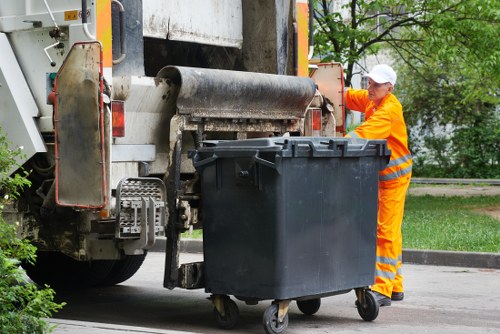 A core part of creating a robust sustainable rubbish area is ensuring that commercial loads are clean and correctly separated at point of collection. Our teams audit loads and provide practical training for staff on-site, while digital manifests track where materials go next — whether to a local MRF, an organics treatment facility, an accredited transfer station or a reuse partner.
We also work to reduce unnecessary transport emissions by optimising routes and using local consolidation points. This lowers costs for businesses and shortens the journey from kerbside to recovery, improving recycling yields and keeping the carbon footprint of waste management as low as possible.
Partnerships, reuse and community networks
Partnerships with charities and reuse organisations are key to diverting usable items from the waste stream. We connect businesses with local and national charities — from furniture reuse groups and clothing banks to food redistribution networks such as FareShare and community kitchens — so that edible surplus and reusable goods are offered a second life. These relationships create social value while supporting the borough's sustainable rubbish area ambitions.
Typical recycling and reuse activities relevant to the area include:
- Cardboard baling and recycling for retail and distribution centres
- Food waste collection for commercial kitchens and catering businesses
- Textile and furniture reuse through local charities
- Electrical and IT asset recycling with certified processors
- Construction and demolition segregation for builders in the borough
These services reflect the multi-layered approach necessary to create a truly sustainable commercial waste system in Walthamstow.
Transport is a major part of commercial waste operations, and cutting emissions is a priority for a greener waste sector. Our fleet includes low-carbon vans—a mix of fully electric vehicles and plug-in hybrids—that serve short urban routes with near-silent, zero-emission collections in residential and town centre areas. Switching to electric and low-emission vehicles supports the wider borough ambition to improve air quality and reduce transport-related carbon emissions.
 We combine low-emission vehicles with efficient route planning and load consolidation to maximise the number of collections per trip while keeping fuel use and emissions minimal. Euro-standard compliant engines are used on heavier vehicles and drivers are trained in eco-driving techniques to further lower consumption.
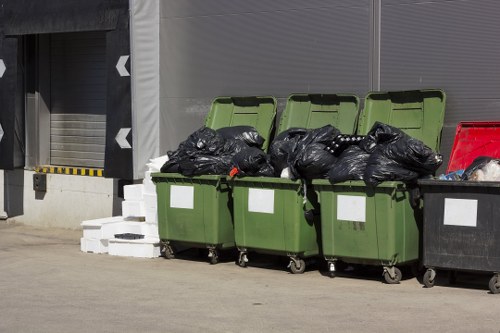 Commercial waste management in Walthamstow also emphasises transparency and continuous improvement. Regular reporting shows diversion rates, carbon savings from reuse and recycling, and progress toward the 65% recycling target. Through collaborative waste action plans, businesses receive tailored recommendations—such as switching to reusable packaging or installing internal food waste bins—that make a measurable difference.
What businesses can expect:
- Clear segregation guidance to meet borough expectations for recycling and organics
- Access to local transfer stations and MRFs that reduce transport miles
- Partnerships with charities for reuse and redistribution
- Low-carbon vans and optimized collection schedules
- Practical support to reach the commercial recycling target and reportable metrics
Commercial Waste Walthamstow aims to make sustainable waste management straightforward for every business in the borough: from micro-retailers to large warehouses. By combining separation-at-source, local transfer solutions, charity partnerships and a low-emission fleet, we build an eco-friendly waste disposal area that benefits both the environment and the local economy.
Together, we can transform the borough’s approach to commercial waste, reduce landfill dependency and create a resilient, sustainable rubbish area in Walthamstow that supports circular practices across London.
